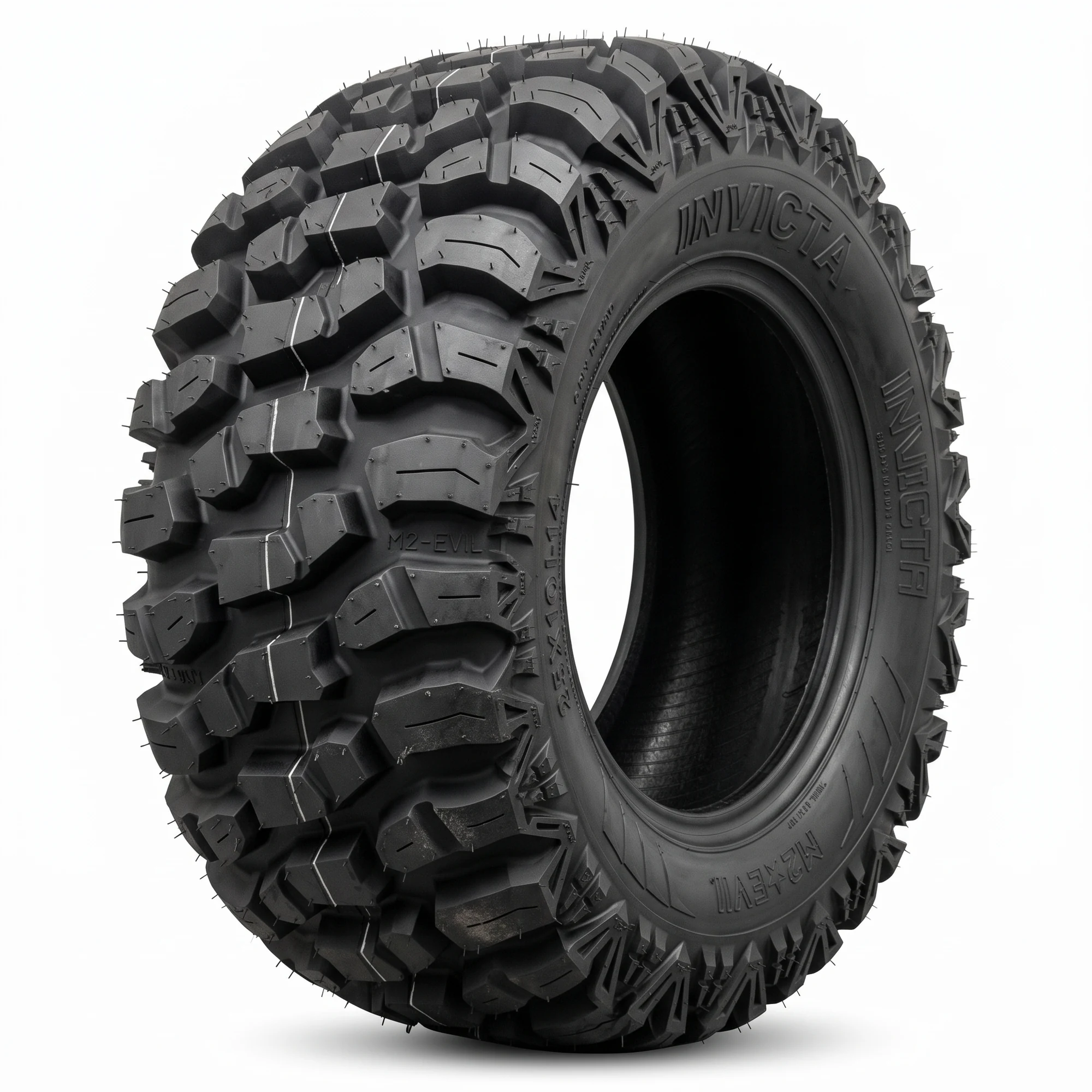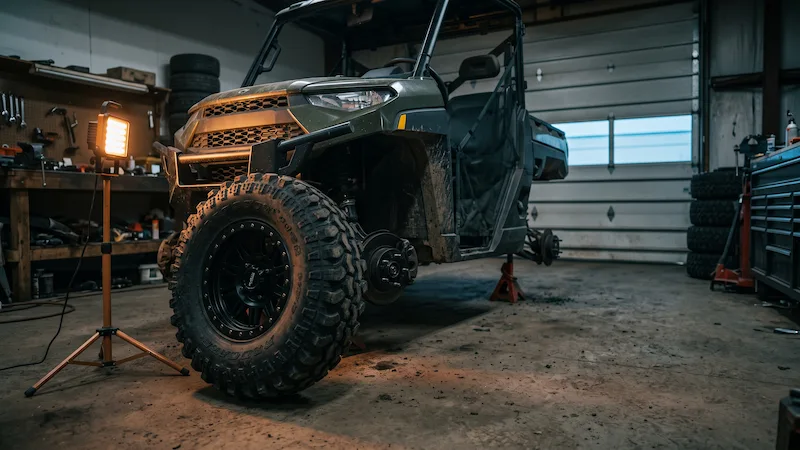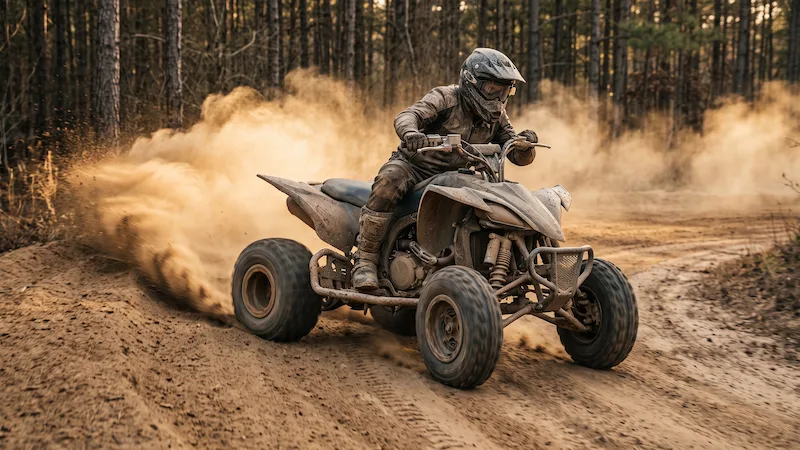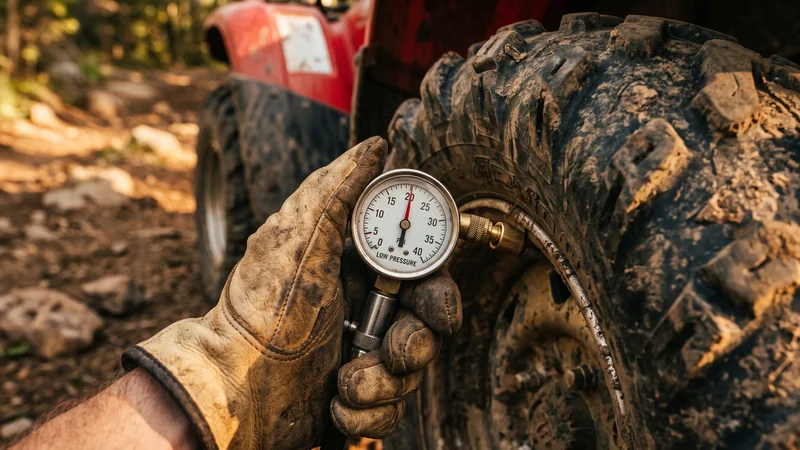
The number molded into your sidewall is a ceiling, not a recommendation. Most riders run ten to fifteen PSI harder than the terrain wants, then blame the tread when the machine skates off a wet rock or refuses to hook up in a bog. Pressure is the cheapest tuning change you own — and on an ATV it is usually the one being set wrong.
What the Sidewall Number Actually Means
The figure stamped on the sidewall is the maximum cold pressure the casing is rated to hold. It is a structural limit, the same way a load rating is a structural limit. Inflating to it proves only that the tire will not unseat — it says nothing about whether the tire can work.
The placard near your seat is closer to useful, but it was written for the tire the machine shipped on, at an average load, on an average surface. Change the tire size, change the ply rating, or leave the average surface, and the placard number stops being your number.
The Three Things Pressure Changes
Every PSI you add or drop moves all three of these at once. There is no adjustment that buys you one without spending another.
- Contact patch shape. Lower pressure lets the casing flatten and spread, putting more lugs on the ground at the same instant. That is the entire reason an aired-down tire climbs a rock face the hard one slides off — same rubber, same tread, more of it touching.
- Carcass compliance. A softer tire deflects around a root or a ledge instead of bouncing off it. The machine tracks straighter, the ride settles, and the suspension stops fighting impacts the tire should have swallowed.
- Pinch and bead risk. Go far enough down and the casing folds against the rim on a hard edge. That is how sidewalls cut and beads unseat. The floor is real, and it moves with ply rating, tire size and how much machine is sitting on top of it.
Casing construction changes how sharply those trade against each other. A radial's flexible sidewall gains contact patch quickly as pressure drops, so small changes do a lot. A bias casing is stiffer through the sidewall and needs a bigger drop to produce the same footprint — which also means it tolerates the low end better before it starts folding.
Pressure by Terrain
One number for the whole day is a compromise nobody asked for. These are the surfaces that actually want different settings.
Mud and Bog
Low. Soft rubber and a long footprint let the lugs reach through the slop for whatever is underneath, and a flexed carcass flexes the tread, which helps it shed its load. Most mud riding happens at eight to twelve PSI on a UTV, not the eighteen to twenty-two you would run on trail or road. On an ATV the same logic lands in the four to six range.
Sand
Lower still. In sand you are not trying to grip, you are trying to float — a wide, long, shallow footprint that carries the machine on top of the surface instead of digging a hole in it. This is the one terrain where the very bottom of your safe range is usually correct.
Rock and Ledge
Middle. Low enough that the tire wraps a ledge and finds edges, high enough that the casing does not fold against the rim when you load a sharp corner. Rock punishes both mistakes: too hard and you skate, too soft and you cut a sidewall. Add a couple of PSI back over your mud setting.
Hardpack and Groomed Trail
Higher. A firm surface already gives you all the grip the tread can use, so extra footprint buys nothing and costs you steering precision, rolling resistance and tread life. Run a hardpack tire near the top of its range and let it roll.
Road and Trailer Transit
Highest. Pavement is where an underinflated off-road tire overheats, squirms under braking and wears its shoulders off. Air up before the transit and back down at the trailhead. Carry a small compressor and this stops being an argument.
Starting Numbers by Machine and Tire
Cold pressures, in PSI, for a machine at typical trail load. Start here, then tune by what the tire tells you. A dash means the tire is the wrong tool for that surface, not that you should guess.
| Tire | Sizes | Trail | Mud | Sand | Rock |
|---|---|---|---|---|---|
| BLACKTAIL | 25x8-12 – 28x10-14 | 6–8 | 4–6 | 4–5 | 6–7 |
| M2 EVIL – ATV | 25x8-12 – 28x10-14 | 6–8 | 4–6 | 4–5 | 6–8 |
| ALL-TERRAIN – ATV | 25x8-12 – 28x10-14 | 7–9 | 5–6 | 4–5 | 7–8 |
| M2 EVIL | 30x10-14 – 35x10-15 | 14–18 | 8–12 | 8–10 | 12–14 |
| BLACKWIDOW | 30x10-14 – 35x10-15 | 14–18 | 8–12 | 8–10 | 12–14 |
| ALL-TERRAIN | 30x10-14 – 35x10-15 | 14–18 | 10–12 | 8–10 | 12–15 |
| ZIPPER | 30x10-14 – 35x10-15 | 16–18 | — | — | 14–16 |
| SAND KING PRO / PADDLE | 30x10-14 – 35x10-15 | — | — | 8–10 | — |
Bigger diameter and heavier machines sit at the top of each range. A loaded rack, a passenger or a winch bumper is worth two to three PSI on a UTV and one to two on an ATV.
Pressure is free horsepower and free suspension travel. Riders will spend nine hundred dollars on tires and then run them at the pressure the dealer set in the parking lot.
Adam Miller, Senior Product Specialist
Finding Your Own Number
The table gets you close. These four steps get you exact, and they take one afternoon.
1. Start cold and write it down
Set every tire before the machine moves. Rubber heats on the trail and pressure climbs two to four PSI with it, so a hot reading tells you nothing you can repeat. Record what you set and what surface you rode.
2. Drop two PSI at a time
Ride the same section again after each drop. You are feeling for the point where the machine stops skipping across the surface and starts tracking through it. That transition is obvious once you have felt it twice.
3. Find the floor, then back off one
Keep going down until the tire rolls under on a hard corner, the steering feels vague, or you hear the sidewall slap. That is your floor for that tire on that machine. Add one PSI and stop — that is your working number.
4. Check the wear pattern after a month
Centre wear means you have been running too hard. Shoulder wear on both edges means too soft. Even wear across the face means the number is right and you can stop thinking about it.
Gauges, Beads and What Goes Wrong
A truck gauge is useless here. A gauge that reads to sixty PSI cannot resolve the difference between five and seven, and on an ATV that difference is the whole setup. Buy a low-pressure gauge that reads to fifteen or twenty and keep it in the machine.
Beads unseat sideways, not straight down. Tires rarely come off the rim from low pressure alone — they come off from low pressure plus a hard side load, which means a rutted corner or a rock face taken at an angle. If you ride aggressively at the bottom of the range, beadlock wheels stop being an accessory.
Temperature moves your setting. A tire set at sixty degrees reads roughly one PSI lower for every ten degrees the ambient drops. A morning in the low thirties will put you further down than you meant to be, which matters most on the terrain where you were already near the floor.
Match all four, then bias if you need to. Start with every corner equal. Only after that should you run one or two PSI more in the rear on a machine that carries weight back there, or in the front on a machine that pushes through corners.