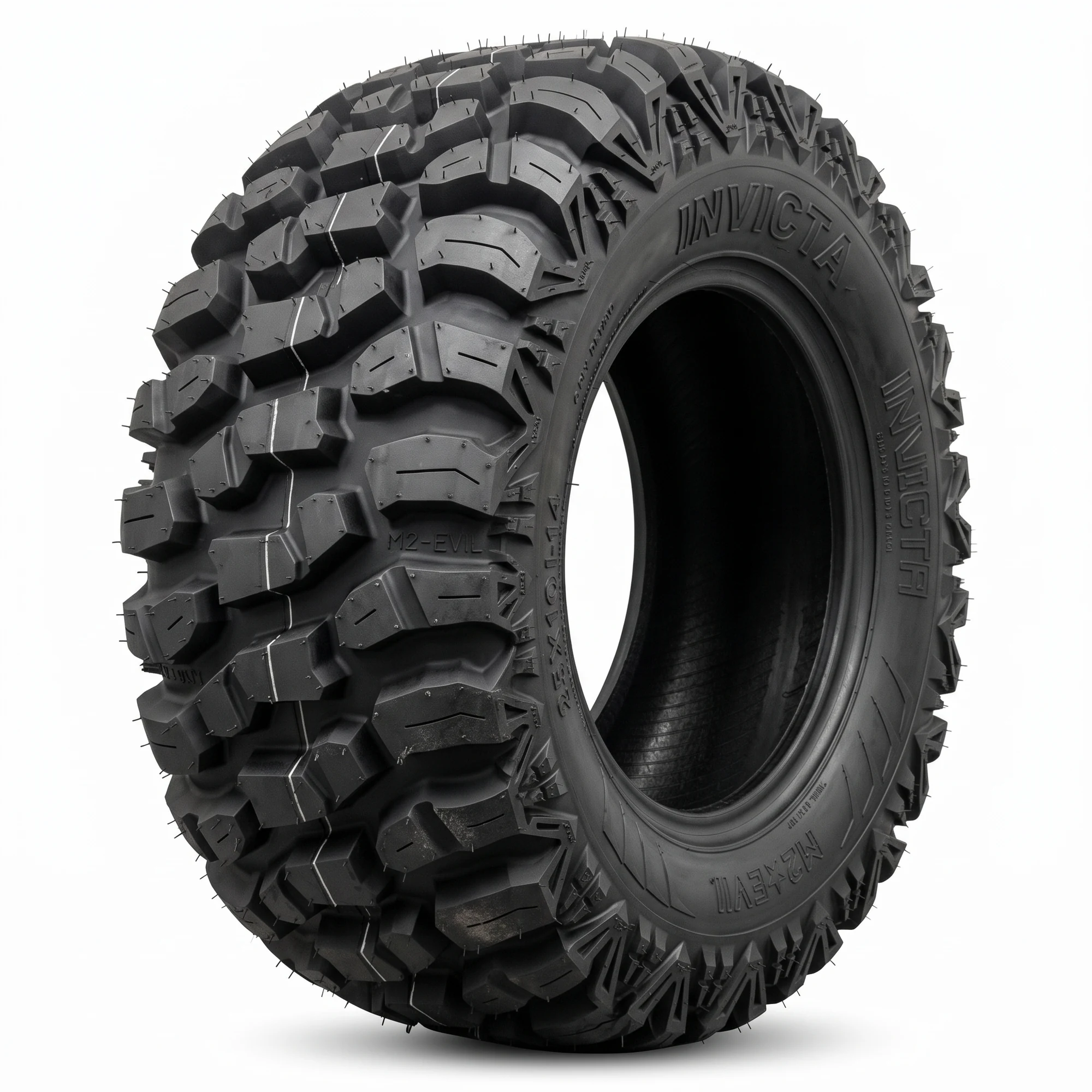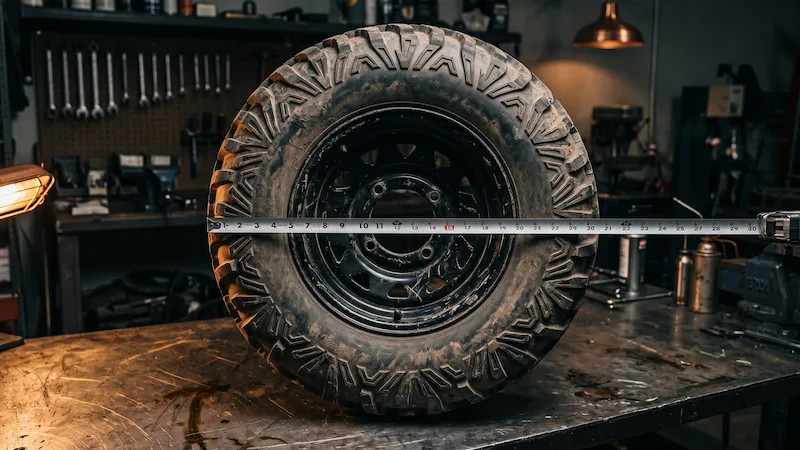
Overall diameter, section width, rim diameter, in that order. Three numbers that look like a part code and are actually three separate promises, one of which is closer to a rounding convention than a measurement. Read them in the right order and the rest of a tire purchase stops being guesswork.
Three Numbers, In Order
Take 32x10-15. The tire stands 32 inches tall, measures 10 inches across at its widest point, and mounts on a 15 inch wheel. Powersports sizing stays in inches while the car world went metric, which is why a UTV tire reads like a lumber order.
Read the last number first. Rim diameter is the only figure with no tolerance and no interpretation: a 15 inch tire does not go on a 14 inch wheel, at any pressure, with any amount of enthusiasm. Once the rim matches, the other two numbers become choices instead of constraints.
Why the Diameter Is Approximate
Stamped diameter is a nominal figure. A tire sold as a 32 often measures somewhere between 31.2 and 31.7 inches new, unloaded, at its rated pressure, and every brand rounds in its own direction. Then the tread wears and takes another third of an inch or so with it over the life of the set.
That matters when you are matching a new pair to a used pair, or working out whether a size jump clears your fenders. Compare measured diameters where a manufacturer publishes them, and treat the number on the sidewall as a category rather than a dimension.
The Metric Format You Will Also See
Smaller quad tires and a lot of imported fitments use the metric style instead: 205/80-12. That reads as 205 millimetres of section width, a sidewall 80 percent as tall as the tire is wide, on a 12 inch wheel.
Converting it takes one line of arithmetic. Sidewall height is 205 multiplied by 0.80, which is 164 millimetres, and there is one of those above the rim and one below. So 328 millimetres of sidewall, about 12.9 inches, plus the 12 inch wheel gives roughly a 24.9 inch tire that is 8.1 inches wide. In inch sizing you would buy that as a 25x8-12.
Section Width Is Not Tread Width
The middle number measures the widest point of the mounted tire, sidewall bulge included, on the rim width the manufacturer specifies. It is not the width of rubber touching the ground. Tread width usually runs somewhere around two thirds to three quarters of section width, so a 10 inch tire might lay down seven inches of contact patch.
Rim width moves that figure too. Mount the same tire on a wider wheel and the sidewalls pull outward, the section width grows, and the tread flattens across the top. Go narrower and the profile balloons, the shoulders lift, and the tire wears its centre. Every tire has a recommended rim width range on the sidewall or the spec sheet, and staying inside it is not optional advice.
Reading the Sizes We Stock
Same three numbers, applied to the range.
| Size | Stands | Section Width | Wheel | Typical Machine |
|---|---|---|---|---|
| 30x10-14 | 30" | 10" | 14" | Stock sport and trail UTVs |
| 32x10-15 | 32" | 10" | 15" | The common UTV step up |
| 33x10-15 | 33" | 10" | 15" | Mud-built trail machines |
| 35x10-15 | 35" | 10" | 15" | Long travel and heavily built cars |
| 25x8-12 | 25" | 8" | 12" | Sport quads and small utility |
| 26x9-12 | 26" | 9" | 12" | Mid-size utility quads |
| 27x10-14 | 27" | 10" | 14" | Full-size utility quads |
| 28x10-14 | 28" | 10" | 14" | Utility quads with clearance to spare |
Most of the fitment problems I sort out started with somebody reading the first number and stopping there. The wheel size is the one that ends the conversation.
Adam Miller, Senior Product Specialist
What Each Number Changes on the Machine
Diameter Changes Gearing and Clearance
Taller tires raise ground clearance at the axle and lengthen the effective final drive at the same time. That second part is the expensive one, because the clutch and belt were calibrated around the stock rolling diameter. Two inches over stock is usually manageable. Beyond that you are shopping for clutch parts whether you planned to or not.
Width Changes Flotation and Effort
A wider tire spreads the same weight over more ground, which is what keeps a machine on top of sand and soft mud instead of in it. It also drags harder in a turn, adds steering effort, and throws more roost onto the doors. Wider is not automatically better, it is a trade you are choosing.
Rim Diameter Changes Sidewall Height
A 32 inch tire on a 15 inch wheel has less sidewall than a 32 on a 14, because the wheel ate the difference. Less sidewall means less air volume to absorb hits and less shape change when you air down, in exchange for a stronger wheel and more rim protection from the shoulder. Rock riders take that trade. Sand riders usually should not.
Measuring What You Have Now
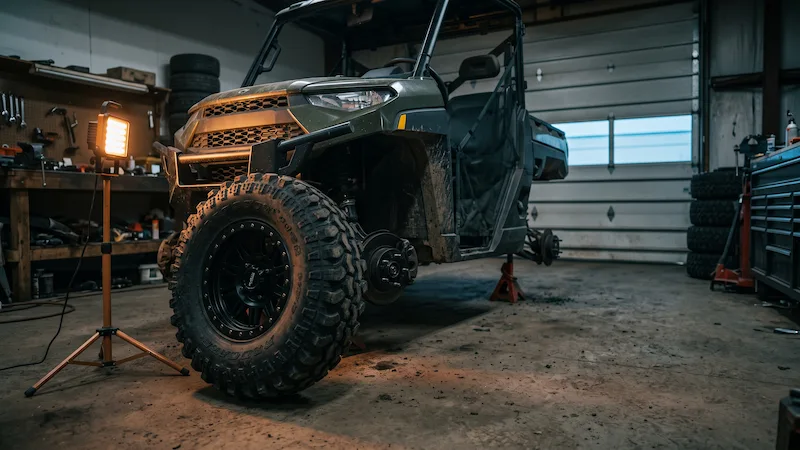
Measure the diameter with the tire off the ground. Jack the machine up, air the tire to its normal pressure, then measure top to bottom through the axle. If you would rather not jack it, mark the tread and the floor, roll the machine exactly one revolution, measure the distance and divide by 3.14.
Take the wheel size off the wheel. Rim diameter and width are usually stamped on the back of the spokes or inside the barrel. Reading it off the old tire works right up until somebody has already fitted the wrong tire.
Check the recommended rim width range. A 10 inch tire on a 7 inch wheel and the same tire on a 9 inch wheel are two different tires in terms of profile, contact patch and bead security. The range is printed for a reason.
Write the three numbers down along with the measured diameter and the wheel width. That short list is what turns a size question into a straight answer.