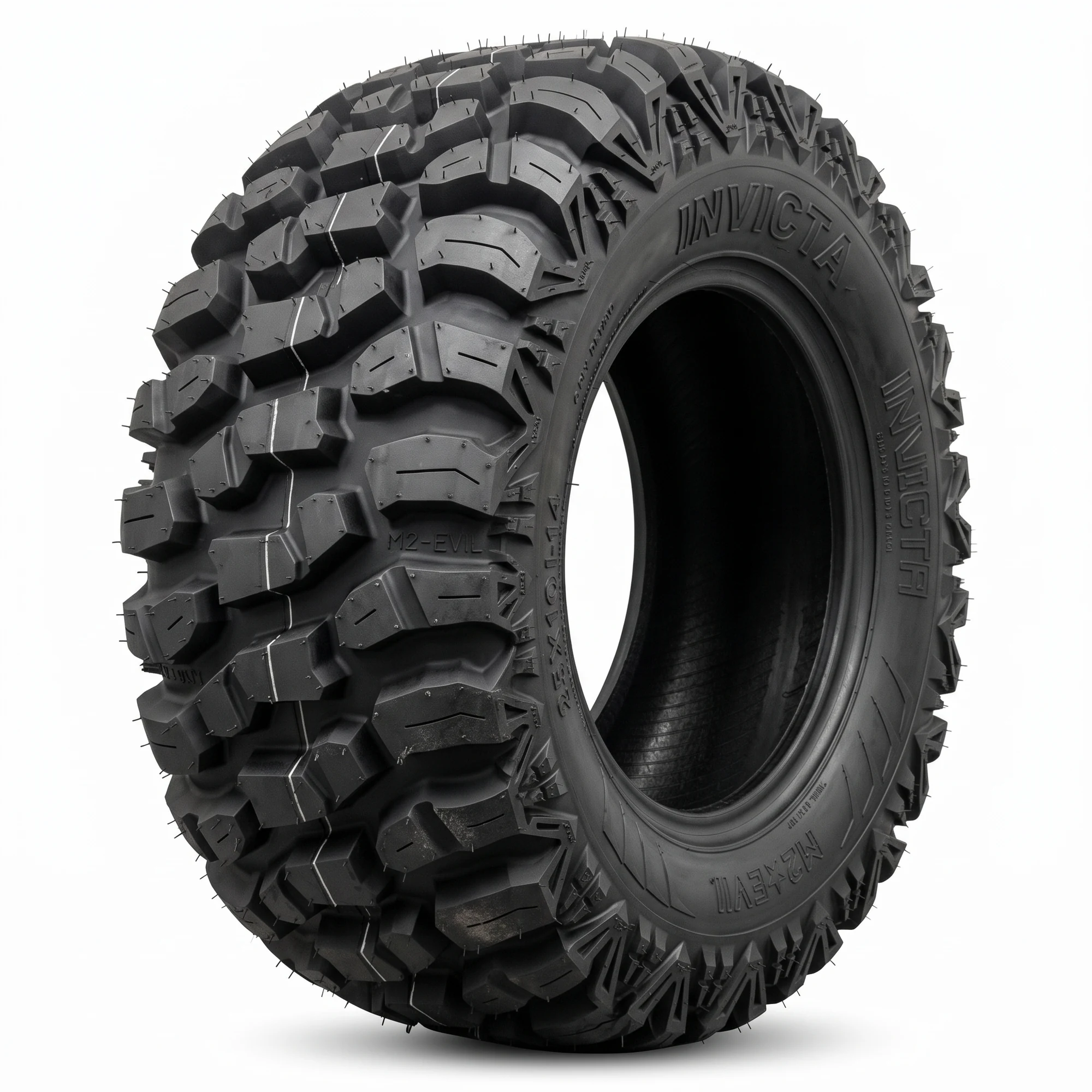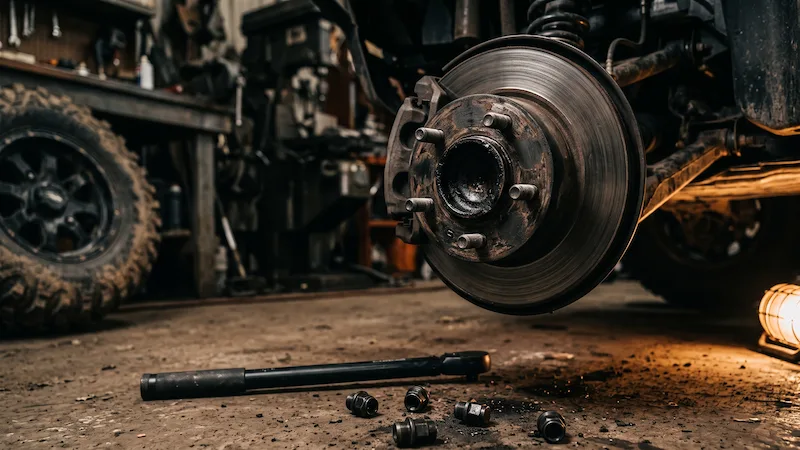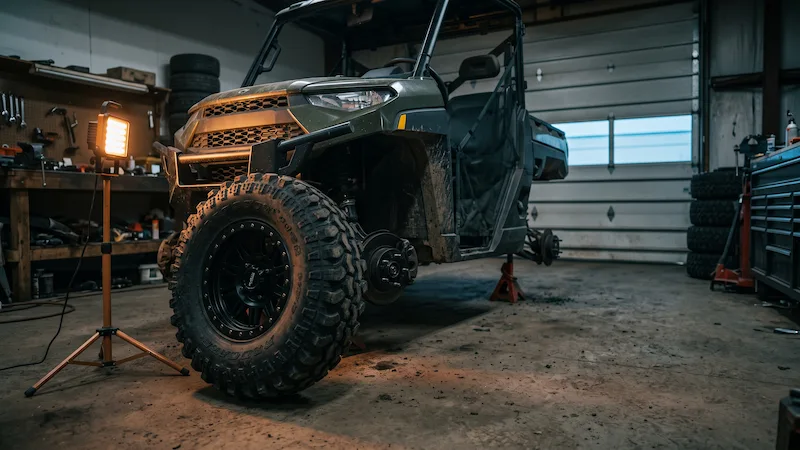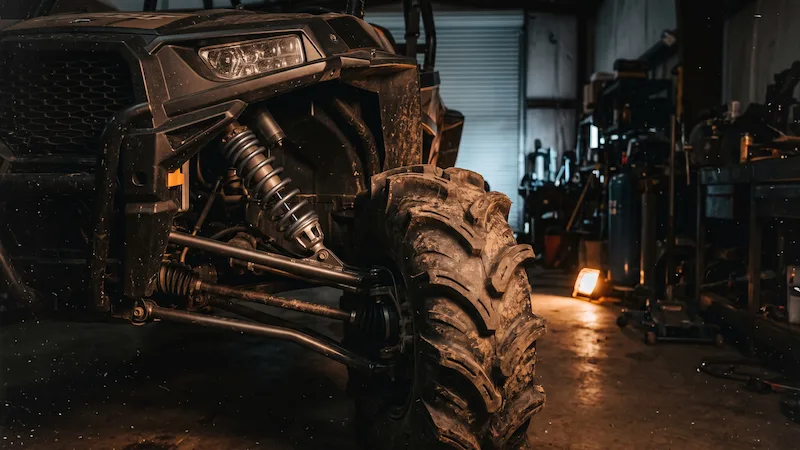
A bigger set on a RZR is two hours of work and about four things that bite afterwards. None of them are the tires. Here is what fits which car, where it rubs when it does not, and the order to do the work in so the belt survives the first weekend.
What Fits Before You Change Anything
Start with what your car left the factory on, because Polaris did not use one size across the range. An XP 1000 generally ships on 29 or 30 inch tires over 14 inch wheels. A Trail or 900 class car sits on 26 to 27 inch tires over 12s. Check yours rather than trusting a forum post about a different model year.
From a 29 or 30, a 30x10-14 is a straight swap. A 32x10-15 is the popular jump and the first one that asks questions of the fenders and the clutch. Anything at 33 and above stops being a tire purchase and becomes a project with a tire in it.
The Turbo S Is the Exception
Turbo S cars roll out of the crate on 32 inch tires and 15 inch wheels, so the arches, the travel and the clutch calibration already expect that diameter. Fitting 32s to a Turbo S is maintenance. Fitting the same 32s to an XP 1000 is a modification. Same tire, two entirely different jobs.
The Four Places It Rubs
Rubbing is rarely where people look first. Check all four with the car loaded, at full steering lock, with the suspension compressed.
- Inner fender liner at full lock. The most common contact point, and the one that leaves a neat polished stripe on the shoulder lugs. Liner bolts and their washers do the actual cutting.
- Radius rod or A-arm at full compression. The tire moves inboard as the suspension collapses, and a wheel with too much backspacing meets the rod at the worst possible moment.
- Tie rod end at lock. Easy to miss because it only touches through a narrow part of the steering sweep, usually one direction only.
- Rear trailing arm and box lip. Taller rear tires find the cargo box edge at droop, and on four-seat cars they find the rear liner first.
Do not do this test by eye in the driveway. Fit the tires, drive twenty minutes of real terrain, then look for witness marks. Rubber tells you where it touched better than any tape measure.
Clutch, Belt and Where the Money Goes
Going from 30 to 32 inches is roughly seven percent taller gearing. From 30 to 33 is about ten percent. Nothing about the primary, the helix or the belt changed, so the clutch holds the belt at a lower ratio for longer, slip time goes up, and belt temperature follows.
Turbo cars absorb more of that than naturally aspirated ones, because there is torque available to cover the difference. On an XP 1000 you feel it immediately in the bottom third of the throttle, especially with passengers or a hill. Budget clutch weights for 32s and a full kit for 33s and up. Gear reduction enters the conversation around 35 inches.
The failure mode is not subtle. Belts do not gradually get worse, they go from fine to shredded on one long climb, usually a long way from the truck.
RZR Fitment at a Glance
| Tire | Wheel | Typical Car | Work Needed |
|---|---|---|---|
| 30x10-14 | 14" | XP 1000, XP 4 | None, this is the replacement size |
| 32x10-15 | 15" | XP 1000, Turbo, Turbo S | Clutch weights on non-turbo cars, watch the liner at lock |
| 33x10-15 | 15" | Turbo and built XP 1000 | Clutch kit, liner trimming, alignment check |
| 35x10-15 | 15" | Long travel and built cars | Clutch and gearing, wheel offset change, arch work |
Every regret story I hear about a tire upgrade is actually a story about a belt, a bearing or a fender bolt. The tires were never the problem.
Adam Miller, Senior Product Specialist
Wheels Decide Half of the Outcome
Most RZRs use the 4/156 bolt pattern, which makes wheel shopping easy and wheel choosing harder, because the pattern says nothing about where the tire ends up. Backspacing does that.
Less backspacing pushes the tire outboard. You get a wider stance and more stability, along with heavier steering, more load on the wheel bearing, and a shoulder lug that now lives closer to the fender edge. More backspacing tucks the tire in toward the radius rod, which frees the fender and creates a compression clearance problem instead. On a 32 or 33 there is usually one narrow window where both ends of that trade are satisfied, and it is worth measuring for rather than guessing at.
Spacers reach the same result by moving the whole wheel out, and they move the bearing loads with it. If you need one to clear, treat the longer studs, the torque check and the bearing inspection interval as part of the install.
The Order of Operations
1. Measure Loaded, at Lock, at Compression
Passengers in, gear in the box, somebody on the wheel while the suspension is cycled. Static clearance in a flat driveway has misled a lot of people into buying 33s.
2. Fit, Ride Short, Then Inspect
Twenty minutes of the terrain you actually ride, then a flashlight on every liner, rod and tie rod end. Trim what the witness marks tell you to trim, and no more than that.
3. Do the Clutch Before the First Long Day
Not after. A clutch kit fitted alongside the tires costs a fraction of a kit fitted after a belt failure, and none of the recovery. Then check toe, because a diameter change shifts the geometry the alignment was set at.
What Regret Actually Looks Like
A shredded belt at forty miles. A sidewall cut by the head of a liner bolt nobody thought to check. Front wheel bearings gone at eight hundred miles because the wheels moved out an inch and nothing else changed. A speedometer reading ten percent slow, hiding services until they are overdue.
All four are avoidable, and all four are cheaper to avoid than to fix. The tires are the easy part of the job, and they are the only part most people plan for.